
The academic year is finally winding down and many of us are hoping to travel— for research, fun, or a bit of both. But things look very different under Trump 2.0—particularly for international travel.

(Note! Do you have further tips to add to this page and share with fellow anthropologists? Please email: heath.cabot@uib.no)
Summer travel is crucial to many of our professional lives: when undergraduate students engage in field schools or internships, when PhD students do preliminary research. and when those of us who teach full-time have a chance to get back to “the field.” And for many of us, that “field” involves plane flights and border crossings. This summer, though, it may be worth rethinking international travel, if possible.
Below is some advice and best practices we have compiled, as well as links for further information. Share this toolkit especially with students or colleagues who may want to travel internationally. If you do plan to travel to, or reenter, the United States, take care to protect your documents and devices; know your rights; and have a Plan B.
Disclaimers
*This toolkit does not replace advice given by a lawyer.
US border enforcement practices are frequently changing, so it is important to do what you can to obtain the *most up to date information.* Further, as the courts rule on relevant lawsuits, understandings of “what to do” may change.”
Rethinking international travel
Must you travel, or is it better to stay put this summer if possible? What is “non-essential travel”? These are highly personal questions and considerations. But remember that the pandemic inspired important innovations and tools for remote fieldwork. This summer might be a good time for archival research or content analysis, or for establishing contacts via Whatsapp/Signal or even phone (as Yarimar Bonilla reminds us in this helpful interview about conducting remote ethnography when Hurricane Maria hit Puerto Rico).
Weighing the risks
In assessing the risks of international travel, your immigration status, online presence, country of origin, and political, cultural and religious background are all relevant. This chart compiled by Yale University’s Office of International Students and Scholars may be helpful in assessing your international travel risk.
As in all border contexts, rights to enter or reenter depend in large part on your status. While citizens (at least for now!) cannot be denied entry to the United States in encounters with border agents, non-citizens may experience questioning, seizure of property, or even removal.
- For US citizens, be prepared for possible questioning and delays upon reentry.
- Permanent residents or those on visas should be particularly careful!
- And for those living outside the US, it may be worth reevaluating or canceling your travel plans.
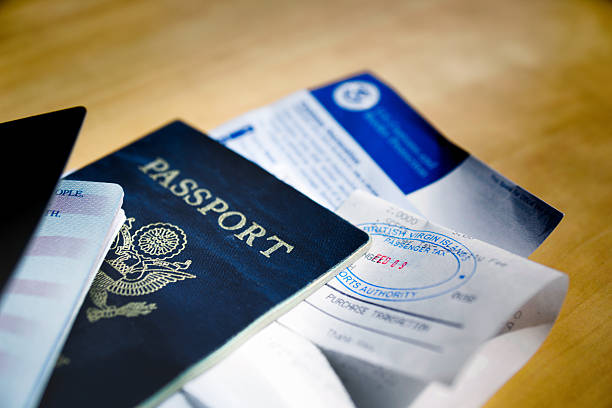
Papers and Documents
(Links and guidance in this section based on toolkits developed by Yale’s Office of International Students and Scholars and Claremont McKenna’s letter to staff and international students.)
*Everyone—also citizens—should carry copies of their documents also when not traveling.
When traveling:
- Ensure your passport or visa is up to date.
- Your passport must be valid for a minimum of six months (into the future) from the time of re-entry to the U.S. Some countries have an agreement with the U.S. that exempts their nationals from the six-month rule for U.S. entry purposes only.
- You also need a valid visa to re-enter the U.S. (except for Canadian citizens, who do not need one). Check the expiration date of the visa in your passport. If your visa has expired, apply for a new one by submitting the online nonimmigrant visa application (DS-160).
- Pack all your immigration documents in your carry-on. Check all the documents you must carry and ensure they are valid for travel before you leave the U.S. (You can find detailed guidance for F-1/J-1 student travel or J-1/H-1B scholar travel).
- When reentering the United States, it may help to be enrolled in Global Entry or MPC (Mobile Passport Control). MPC is a free service and it may decrease your vulnerability to scrutiny.
You should also consider bringing:
- Both digital and printed copies of your immigration documents — and keep them easily accessible.
- Letter from supervisor or chair verifying your status, employment/enrollment, and purpose of travel.
- Evidence of funding, if applicable, and a recent bank statement.
- Proof of connection to your US university in the form of a letter or, for students, an enrollment verification form. At some institutions, a verification my may be ordered automatically via the registrar’s webpage.
- U.S. address and school/employer contact information.
- COVID-related documents (if required) — While many restrictions have eased, certain countries or airlines might still require proof of vaccination or testing.
- Proof of U.S. Address (copy of lease, utility bill, or letter from school/employer confirming residence).
- Travel Itinerary.
(From Claremont McKenna’s travel guidance for international staff and students, accessed May 20, 2025).
Technology and Hardware

We highly recommend that you download, print, and carry the Electronic Frontier Foundation‘s pocket guide to crossing the US border!
Mobile Phones – tips!
- If you can, do not travel with your primary cellphone.
- Get a “burner phone”, i.e. a cheap Android phone if you want a smartphone, or an old-style “dumb” phone.
- Buy a sim card in the country of arrival or a virtual e-sim (if compatible with your burner).
- Make sure you get a phone that can be used in your country of arrival (list of LTE [not 5G] bands per country can be found here; and list of 5G here).
- There are plenty of cheap phones available online (For instance, an older Google Pixel (4, 5, 6, 7) or iPhone (11, 12, 13, etc) will work worldwide and you can generally find them for under 100$.)
- Regarding “dumb phones,” a Nokia 105 or 110 will work pretty much everywhere. If you have doubts about which networks a particularly mobile phone can access, the following link ca help: www.gsmarena.com
Configuring Your Phone for Secure Travel
- Make sure you do not set up your travel or burner phone with your primary google or apple accounts.
- Careful: iPhones and most Android-based phones run on cloud services and apps (icloud or google) and often automatically load your emails/messages/photos/files/etc.
- Make sure there are no sensitive data in your phone (photos, recordings, etc.).
- Delete apps that provide automatic access to services such as email, calendar, etc., or social media accounts.
- The safest way to access these services while traveling is via web-based versions (via web browser).
- If you use a password manager app, delete it before getting through customs (US border agents could thus gain access also to your web-based services–such as social media).
Cloud Services:
- Backup/ save all your data on a secure cloud computing service.
- Consider using an encrypted cloud service for sensitive data.
- Customs agents can search your device, but they cannot access data that is not in your hard drive. Backing up your devices on a secure and encrypted online cloud service will help protect data that is either sensitive or could be seen as suspicious.
- Cloud services with servers outside the USA are also recommended: such as JottaCloud (Norway), Proton (Switzerland), or many of the other services offered.
- Consider using an end-to-end encrypted email and calendar account with servers outside the USA, such as Proton Mail (Switzerland), Tuta Mail (Germany), or other alternatives.
- Often these services also offer cellphone and desktop apps. Before traveling, delete these apps from your devices and plan to access their services via web browser to avoid border agents involuntarily entering your cloud drive, calendar, or email.
- If you use password manager software, also delete it from your computer, since border agents could ask for that password and access any service you use.
Useful Tech Related Link and Resources
- The organization Dream Big, Act Bigger has designed a simple shortcut for IPhones that notifies relevant people that you are at customs without making it necessary to type on your phone or escalate. More information is here and you can download the shortcut here. (As of now for IPhone only).
- You may also want to check out the Phosh operating system for cellphones (https://en.wikipedia.org/wiki/Phosh ).
- An article from Proton for further advice on how to protect your devices when crossing borders.
- For those aspiring tech geeks out there seeking top levels of security, check out the PureOS operating system for computers (https://en.wikipedia.org/wiki/PureOS ) or any other Operating System that is vetted by the Free Software Foundation (https://www.fsf.org/)
- A helpful article from Wired on how to protect yourself from phone searches at the border.
- An article from the Washington Post on how to lock down your phone.
- The American Association for Retired Persons also has advice on traveling securely!

When it comes to technology search and seizure at the US border, your status highly impacts your rights.
The American Civil Liberties Union has provided extensive information regarding your rights when reentering the United States, including your rights to maintaining privacy on your devices. Below you will find are a few key highlights from their webpages, but we strongly recommend looking at their pages in detail.
Do I have to provide my laptop passwords or unlock my mobile phone for law enforcement officers at the border?
“Customs officers have sometimes asked travelers to provide their laptop passwords or unlock their mobile phones when they are entering or leaving the United States. Your legal status in the country may inform what you decide to do if you’re asked for a password to unlock your device. U.S. citizens cannot be denied entry to the United States for refusing to provide passwords or unlocking devices. Refusal to do so might lead to delay, additional questioning, and/or officers seizing your device for further inspection. The same should be true for those who have previously been admitted to the U.S. as lawful permanent residents and have maintained their status — their green cards can’t be revoked without a hearing before an immigration judge. Visa holders and tourists from visa waiver countries, however, run the risk of being denied entry if they refuse to provide a password, and they should consider that risk before deciding how to proceed. If an officer searches and/or confiscates your laptop or cell phone, get a receipt for your property.”
Can border officers ask questions about my immigration status?
- U.S. Citizens: You only have to answer questions establishing your identity and citizenship (in addition to customs-related questions). Refusal to answer other questions may cause delay, but officials may not deny you entry into the U.S. if you have established your identity and citizenship.
- Lawful Permanent Residents (green card holders or LPRs): You only have to answer questions establishing your identity and permanent residency (in addition to customs-related questions). Refusal to answer other questions will likely cause delay, but officials may not deny you entry into the U.S. for failure to answer other questions. LPR status may be revoked only by an immigration judge. Do not give up your green card voluntarily!
- Non-citizen visa holders and visitors: Refusing to answer questions asked by airport or border officials could cause delay and might also lead to officers denying your entry into the country. Officers may not select you for questioning based on your religion, race, national origin, gender, ethnicity, or political beliefs.
If border agents search your cell phone or laptop, they are looking for data on political activities or opinions and may use that to deny you entry.
Can U.S. customs officers ask questions about my religious beliefs and practices or political opinions?
Religious and political beliefs and associations are protected by the First Amendment. Customs officers have sometimes asked travelers about their religious affiliation, religious practices, association with religious institutions, and political opinions. The travelers targeted for such questioning have often been Muslim. Questioning individuals about their religious and political beliefs, associations, and practices can infringe upon rights guaranteed by the Constitution and federal law — these rights are not surrendered at the border.
U.S. Citizens and Lawful Permanent Residents: You do not have to answer questions about your religious beliefs and practices or political opinions, and you cannot be denied entry to the United States for declining to answer such questions. If customs officers persist in asking you such questions, you can request to see a supervisor.
Non-citizen visa holders and visitors: You may decline to answer general questions about your religious beliefs and political opinions, but doing so may lead to delay or additional questioning, or possibly denial of your entry into the country. If you are told you cannot enter the country and you fear you might be persecuted or tortured if you are sent back to the country from which you traveled, you should tell the customs officer about your fear and ask for asylum.
(From the ACLU of Northern California accessed May 20, 2025)
Thinking of visiting the US from abroad?
- The Higher Ed Immigration Portal has extensive information on rights, risks, and ways to protect yourself.
- An article in the Guardian with considerations and recommendations for international visitors.
- An article in the Conversation the risks of travel to the US as well as your rights and protections.
- An article from a law firm for international students.
Things that can get your entry or reentry denied:
- Expressing negative views of the Trump administration’s science policy (if they find it in your cell phone, etc.) See, for instance the following article: https://www.reuters.com/world/french-scientist-denied-entry-into-us-french-government-says-2025-03-20/. This was based on a search of messages in his phone.
- Being part of a pro-Palestine protest; or of having a family tie to someone who is politically engaged in pro-Palestine activities. Photos of protests on a cell phone might be used against a person. See https://www.insidehighered.com/news/faculty-issues/academic-freedom/2025/03/21/trump-administration-attempts-deport-bar-entry.
Possible consequences of being denied entry:
- Return to Origin: The most common outcome is being sent back to the country or place you came from during this travel.
- Detention: You may be detained for further processing or questioning, and may be accompanied by an immigration officer.
- Banning: Depending on the reason for denial, you may be banned from entering the U.S. for a certain period or permanently.
What to do if denied entry:
- Stay Calm: Try to remain calm and cooperate with the immigration officials.
- Ask Questions: If you have any questions or concerns, ask the officer for clarification.
- Know Your Rights: Understand your rights and options, including the right to contact your country’s embassy or consulate.
- Seek Legal Advice: Consult with an immigration attorney to understand your options and legal recourse, according to Andres Mejer Law.
- For example, if you are denied entry due to a criminal conviction, you may need to seek an ineligibility waiver to be able to re-enter the U.S., according to the US Entry Waiver site.
If detained:
In cases where people have been detained, the grounds for detention have been extremely vague, and the person has been whisked into custody by ICE and, in some cases, immediately sent to a different jurisdiction, far from home. (i.e., Louisiana) so that the person has no opportunity to seek legal recourse prior to deportation. Some persons have been put into custody for several weeks (as has even happened to some tourists.
Know your rights, which include the right to:
- Stay silent
- Talk to a lawyer
- Contact your embassy or consulate and a member of your family (All jails have lists of phone numbers for consulates. Ask to see the list.)
- You may be asked where you were born, how you entered the U.S. You don’t ever have to answer those questions. Your responses may be used to detain and deport you.
- Do not sign anything without talking to a lawyer. If you are not a U.S. citizen, signing certain documents may mean you are giving up your opportunity to try to stay in the U.S.
Courtesy of APLA

 Association for Political and Legal Anthropology