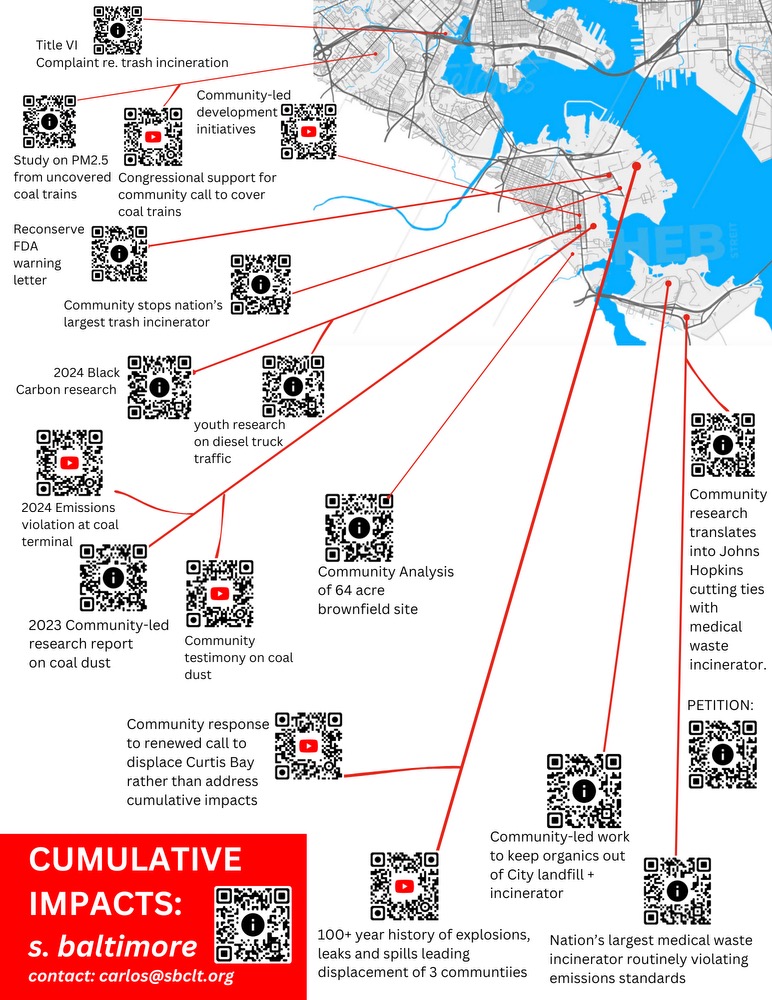
Below is a video conversation about the 2024 book prize winner, Fighting to Breathe: Race, Toxicity and the Rise of Youth Activism in South Baltimore (UC Press, 2022), with author Nicole Fabricant. Nicole discusses the book with Shashawnda Campbell, Robert Samet, and Bret Gustafson.
Additional resources for reading and teaching:
A designated page for Fighting to Breathe with numerous Reading and Teaching Resources,” including a “Toxic Tour” of Baltimore.
Learn more about Towson University’s collaboration with Ben Franklin High School via Participatory Action Research: High School Participatory Action Research
A 2023 study that helps contextualize the lethal ways in which asthma affects those living the US “Asthma Capitals,” and a 2012 Air Quality Report from Curtis Bay, Baltimore.
And read more about the South Baltimore Community Land Trust and their important environmental justice work.
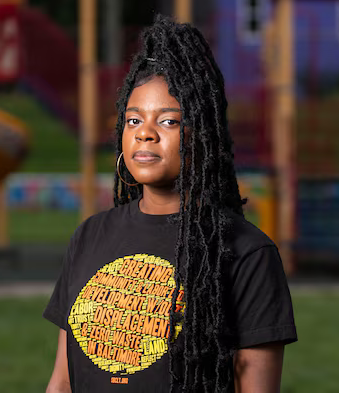
Shashawnda Campbell is a community leader and environmental justice coordinator for the South Baltimore Community Land Trust (SBCLT).
As a student at Ben Franklin High School in South Baltimore, Shashawnda co-founded “Free Your Voice”, a student led group that worked for 5 years to shut down the largest incinerator proposal in US history set to be built less than a mile away from their school. Shashawnda has since helped develop the South Baltimore Community Land Trust to create community-led development without displacement, permanently affordable housing, and zero waste infrastructure. A lifelong Baltimore resident, Shashawnda is committed to the implementation of Baltimore’s Fair Development Plan for Zero Waste to help lead her City through a just transition that respects our lives and our planet.
You can read more about Shashawnda’s work here:
And you can also hear her on NPR:
https://www.npr.org/2023/10/04/1197954102/student-activists-climate-change-baltimore
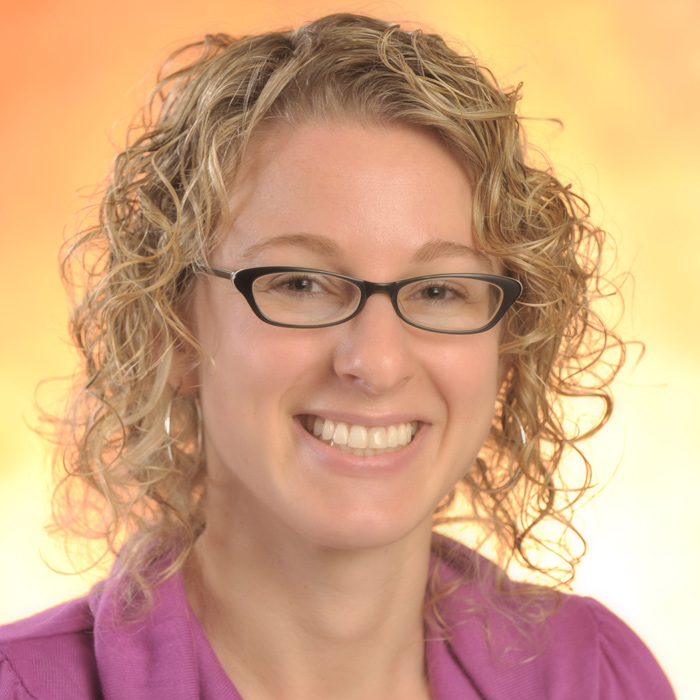
Nicole Fabricant is Professor of Anthropology at Towson University in Maryland. She teaches courses on resource wars, environmental justice, and the climate crisis. Her most recent book, Fighting to Breathe Race, Toxicity and the Rise of Youth Activism in Baltimore (University of California Press 2022) looks at the cumulative impacts of industrial stationary toxic facilities in South Baltimore. It follows a dynamic and creative group of high school students who decided to fight back against the race- and class-based health disparities and inequality of industrial expansion. As a Baltimore resident and activist-scholar, Fabricant documents how these young organizers came to envision, design, and create a more just and sustainable future. Fighting to Breathe received the 2024 APLA book prize for best critical ethnography in political anthropology.
Her new research examines the political economy of coal (from extraction to export). She also documents political campaigns of solidarity and resistance across the entire supply chain from Appalachia to Baltimore as movement activists organize for a Just Transition from coal. She is currently working on a manuscript on the need for the Re-nationalization and Electrification of Rail.
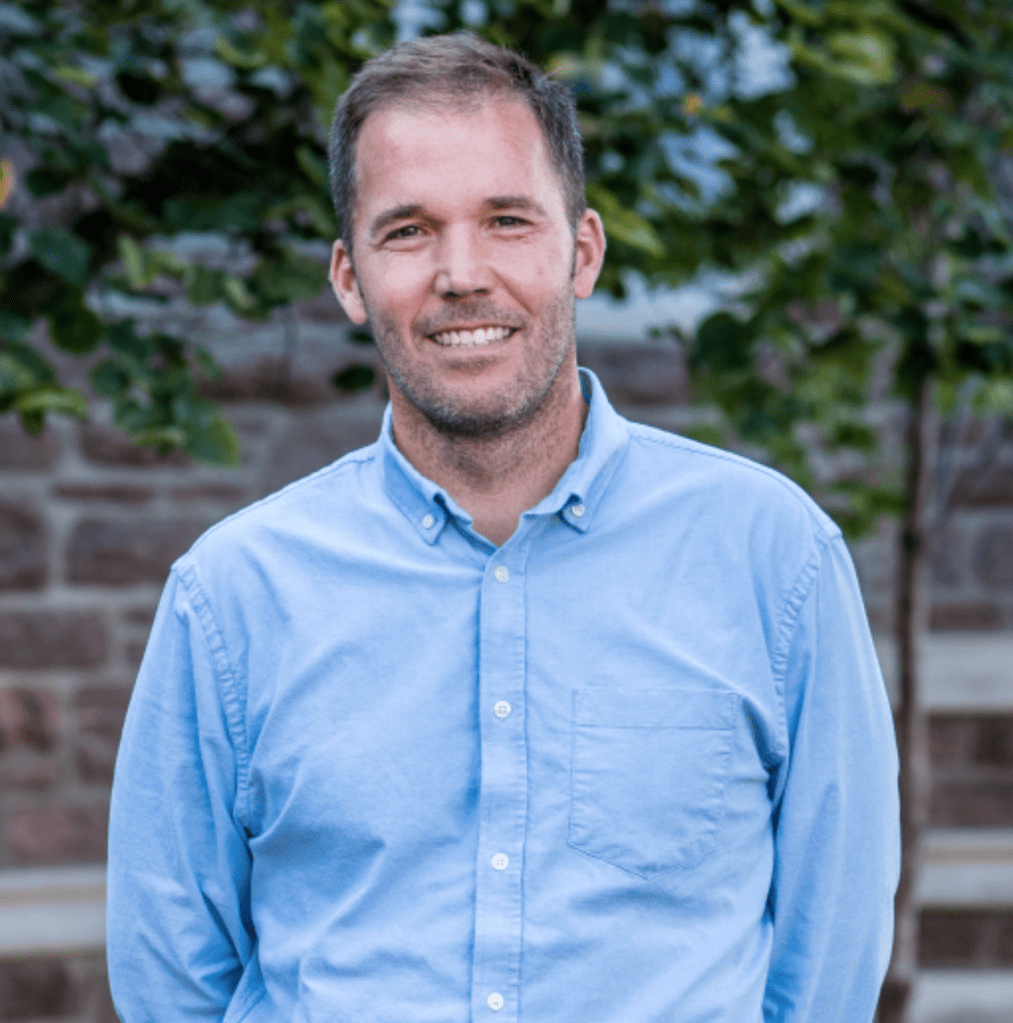
Bret Gustafson is a political anthropologist with an interest in climate politics, fossil fuels, and the energy transition. His work focuses primarily on Latin America and the United States. Gustafson has worked for many years with the Assembly of Guarani People in Bolivia. His early research explored Guarani language revitalization and education, questions he pursued through work with Guarani linguists, educators, and leaders, culminating in several collaborative projects and the book New Languages of the State: Indigenous Resurgence and the Politics of Knowledge in Bolivia (Duke 2009). He continues to research and write on the Guarani language and on Indigenous language and education across Latin America. Given the impact of natural gas development across Guarani territory, he opened another line of research on the politics of energy, climate change, and extractivism, as seen through the lens of Bolivia’s natural gas boom. Some of this work is reflected in the book Bolivia in the Age of Gas (Duke 2020). His interest in fossil fuels has also led to teaching and research on the problem of fossil fuels and the energy transition in the U.S. For more information, please visit his website: https://sites.wustl.edu/bgustafson/.

Robert Samet works on media, law, and politics in the Americas. Since 2006, he has been conducting research in and on Venezuela. Robert’s fieldwork alongside crime reporters in Caracas was the subject of an award-winning first book, Deadline: Populism and the Press in Venezuela (Chicago 2019). Currently, he is pursuing a pair of projects that build on this research. The first uses the Venezuelan case to construct a theoretical approach to populism that combines the inductive methods of ethnography with conceptual tools from communications and cultural studies. As part of this project, he is co-organizing a week-long symposium with the Wenner-Gren Foundation on “Anthropological Approaches to Populism” in Spring 2022. The second project looks at how fear of police impacts urban space in a way that exacerbates the problem of violent crime in cities like Caracas. This project draws on comparative ethnography to show how substantive police reforms are undermined by tools of perception management.

 Association for Political and Legal Anthropology